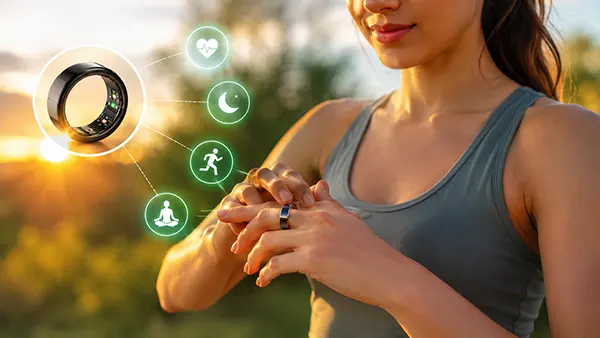
Wearable technology has changed significantly over the past few years, and smart rings are now becoming one of the most discussed devices in personal electronics. In 2026, brands such as Oura, Samsung, Ultrahuman and RingConn continue expanding this category with compact devices designed for health monitoring, sleep analysis and daily activity tracking. Unlike smartwatches, smart rings focus on discreet usage and long battery life while still collecting large amounts of biometric data. This shift has encouraged many users to question whether smart rings can realistically replace traditional fitness bands and smartwatches or whether they remain a secondary gadget for limited tasks.
How Smart Rings Work in 2026
Modern smart rings contain miniature sensors capable of measuring heart rate, blood oxygen saturation, skin temperature, movement patterns and sleep quality. Improvements in semiconductor production have allowed manufacturers to fit advanced monitoring systems into devices weighing only a few grams. Many current models use infrared photoplethysmography sensors, accelerometers and temperature sensors similar to those found in premium smartwatches.
One reason for the rapid popularity of smart rings is their comfort during continuous wear. A ring is less intrusive during sleep, exercise and office work than a smartwatch with a large display. This has made smart rings especially attractive for users interested in passive health monitoring rather than active interaction with notifications or applications throughout the day.
Battery performance has also improved considerably by 2026 standards. Premium smart rings now commonly operate for five to ten days on a single charge depending on sensor activity. This exceeds many smartwatches that require charging every one or two days. Wireless charging cases and energy-efficient chipsets have helped make rings more practical for everyday use.
Main Features That Differentiate Smart Rings
One of the biggest distinctions between smart rings and smartwatches is the absence of a display. Smart rings are designed primarily for data collection, while information is viewed later in a mobile application. This minimalistic approach appeals to users who prefer fewer distractions and reduced screen time during the day.
Another important factor is accuracy during sleep tracking. Because the ring remains in close contact with finger arteries, some manufacturers claim better overnight biometric readings compared to wrist-based devices. Independent tests conducted by several technology review laboratories in 2025 and 2026 showed that high-end smart rings can provide highly reliable sleep-stage analysis and resting heart rate measurements.
Smart rings also focus heavily on recovery metrics and long-term health trends. Instead of encouraging constant interaction, they prioritise behavioural analysis such as stress balance, recovery readiness and sleep consistency. This makes them particularly popular among office workers, athletes and users interested in wellness optimisation.
Can Smart Rings Fully Replace Smartwatches?
Despite their growing capabilities, smart rings still face several limitations compared to smartwatches. A smartwatch functions as both a wearable computer and a health tracker. It can display messages, answer calls, provide GPS navigation, support payments and run third-party applications. Smart rings currently cannot match this level of functionality because of their limited physical size.
Fitness enthusiasts also continue relying on smartwatches for workout visualisation and real-time exercise statistics. During running, cycling or gym sessions, users often prefer seeing pace, heart rate zones and route mapping directly on a screen. Smart rings generally collect workout information in the background but do not provide detailed live feedback.
Compatibility ecosystems remain another major advantage for smartwatches. Apple Watch, Samsung Galaxy Watch and Garmin devices are deeply integrated into broader ecosystems involving smartphones, fitness services and productivity tools. Smart rings are improving in this area, though their software environments are still more limited in comparison.
Where Smart Rings Already Compete Successfully
Although smart rings cannot fully replace smartwatches for every task, they already compete strongly in several categories. Sleep tracking is one of the clearest examples. Many users find watches uncomfortable overnight, whereas rings are significantly less noticeable and easier to wear continuously.
Battery efficiency also gives smart rings an important advantage. Users who dislike daily charging routines often prefer rings because they require less maintenance. This becomes especially useful during travel or business trips where carrying multiple chargers may be inconvenient.
Another area where smart rings perform well is discreet health tracking. In professional environments, a smartwatch can appear distracting during meetings or formal events. A smart ring blends naturally with jewellery and allows continuous monitoring without attracting attention. This subtle design has become one of the strongest selling points for the category in 2026.
The Future of Wearable Technology
The wearable electronics industry is increasingly moving towards smaller and less intrusive devices. Analysts expect smart rings to become more advanced over the next several years as sensor miniaturisation continues. Some manufacturers are already experimenting with non-invasive glucose monitoring, hydration tracking and blood pressure estimation technologies for future ring generations.
Artificial intelligence also plays a growing role in wearable development. Instead of simply recording raw data, modern smart rings now provide personalised recommendations based on long-term behavioural analysis. Sleep timing adjustments, recovery guidance and stress management suggestions are becoming more detailed thanks to machine learning systems trained on large health datasets.
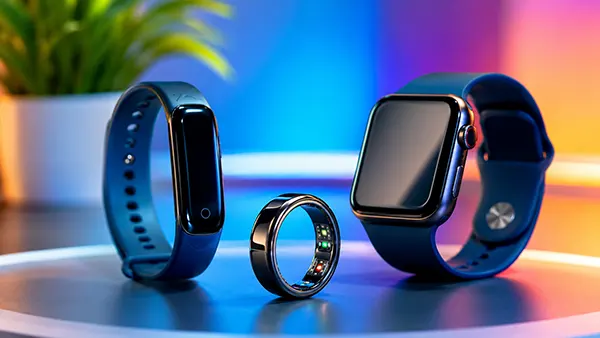
Rather than completely replacing smartwatches, smart rings may eventually become part of a broader ecosystem where multiple wearable devices work together. A smartwatch could handle communication and navigation while a ring focuses on continuous biometric tracking. This combined approach already appears in some premium ecosystems introduced during 2025 and 2026.
Who Should Consider Buying a Smart Ring
Smart rings are especially suitable for users interested in health monitoring without constant digital interruptions. People who prioritise sleep quality, recovery analysis and discreet wearable technology often benefit the most from this category of device.
They are also practical for individuals who dislike wearing watches during sleep or physical activity. Because rings are lightweight and compact, they can remain comfortable throughout the entire day and night without causing wrist fatigue.
However, users expecting full smartwatch functionality may still find smart rings insufficient as a standalone device. Navigation, messaging, mobile payments and live workout tracking remain areas where smartwatches continue leading the wearable market. In 2026, smart rings are best viewed not as direct replacements for every wearable device, but as specialised tools offering a different balance between comfort, health analytics and simplicity.